EKAM’s slow riding skills course
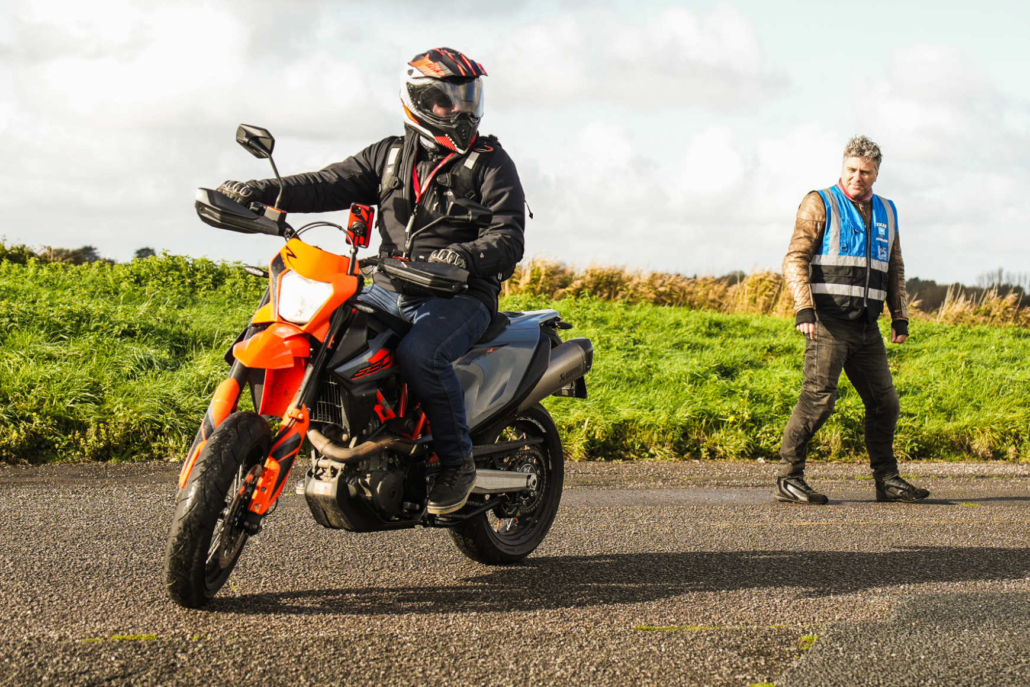
The aims and objectives of our slow speed course is to give riders the confidence to manoeuvre a motorcycle at slow speed. It is also to learn and practise the correct techniques an IAM examiner is looking for during the Advanced Rider Test. Our course will consist of practising structured drills and exercises around cones and obstacles and typically last around three hours. It is currently held at Furley Park Primary School in Ashford – click here to see the school’s location.
But how?
First, we need to relax! Relax your body, especially your arms and shoulders. The more relaxed you are the more feedback you will get from the bike. Get both feet up on the footpegs immediately the bike is underway. This lowers your centre of gravity, as your weight is shared at the pegs.
There are three motorcycle inputs to co-ordinate to become truly proficient at slow speed control:
1. Throttle
Slow speed control doesn’t need oodles of revs, but you need enough to ensure the bike doesn’t stall, leading to an embarrassing drop! Try gripping the bar end weight as well as the throttle to help you ‘lock’ at set revs.
2. Feathered clutch
Hold the clutch a fraction beyond its biting point – at really slow speeds you should be able to come to a stop using the rear brake, without adjusting the throttle or clutch… then pull away by just releasing the rear brake.
3. Rear brake
Speed control is always done using the rear brake instead of the front brake. This is because the front brake will make the forks dive and destabilise the motorcycle. It is a recipe for an embarrassing topple and an expensive new mirror…
At really slow speeds (when doing a U-turn for example), don’t even cover the front brake. You’ll be less likely to panic and grab it then!
Target fixation
You will go where you look – so don’t get fixated on objects around you. Turn your whole head to look where you want to go, not just your eyes.
When learning slow speed control, less is more. Avoid too many inputs all at once. Feel for the response you get from each input and adjust accordingly.
And the best bit? Once you can handle your bike at a crawl, everything else feels easy. Filtering becomes smoother, junctions less terrifying – and your mates will stop laughing at you stalling outside the café!
Thank you to our supporters
The following organisations support EKAM through donation, sponsoring or advertising. Please have a look at what they offer.


